
California Title 24 Demand Response Requirements (2025) – OpenADR Devices
California Title 24 requires OpenADR demand response capability for many commercial buildings. Learn how compliant DR devices work.

California Title 24 Demand Response Requirements
California’s building energy code requires many new commercial buildings to include automated demand response (ADR) capability. These requirements are defined in California Title 24, Part 6 – Building Energy Efficiency Standards.
Demand response allows utilities to automatically reduce electricity consumption during grid stress events by sending signals to building control systems.
The standard method used across California utilities is OpenADR 2.0b, an open communications protocol that enables secure communication between the utility and a building.
Buildings must install a certified OpenADR Virtual End Node (VEN) device to receive these signals and automatically adjust loads such as HVAC systems.
What Title 24 Requires
Most new commercial construction and major renovations must include infrastructure to support automated demand response.
Typical requirements include:
• An OpenADR 2.0b certified VEN device
• Ability to receive demand response signals from the utility
• Automated response capability in building systems
• Integration with HVAC, lighting, or other controllable loads
The demand response system must be capable of:
• Receiving event signals from the utility
• Automatically adjusting loads during events
• Logging and confirming responses
• Maintaining secure communications with the utility demand response server.

When Title 24 Demand Response Is Required
Demand response capability is typically required when:
• New commercial buildings exceed specified load thresholds
• HVAC systems exceed defined capacity limits
• Lighting systems exceed certain wattage levels
• Major renovations trigger energy code compliance updates
Requirements vary depending on:
• Building size
• Climate zone
• Equipment capacity
• Type of construction project
Because of these conditions, many electrical contractors and engineers now specify OpenADR devices as part of the base design.
The Role of OpenADR
California utilities such as PG&E, SCE, and SMUD use the OpenADR standard to communicate with commercial buildings.
OpenADR enables utilities to send secure signals that trigger pre-programmed building responses such as:
• Adjusting HVAC temperature setpoints
• Reducing compressor load
• Dimming lighting systems
• Temporarily disabling non-critical equipment
These automated responses help stabilize the grid during peak demand periods.
What Is an OpenADR VEN Device?
A Virtual End Node (VEN) is the device installed at the building.
It connects to the utility’s Virtual Top Node (VTN) server and receives demand response events.
The VEN device then communicates with local building systems to implement the response.
Typical functions of a VEN include:
• Receiving demand response events
• Interpreting OpenADR signals
• Controlling building equipment
• Logging responses and diagnostics
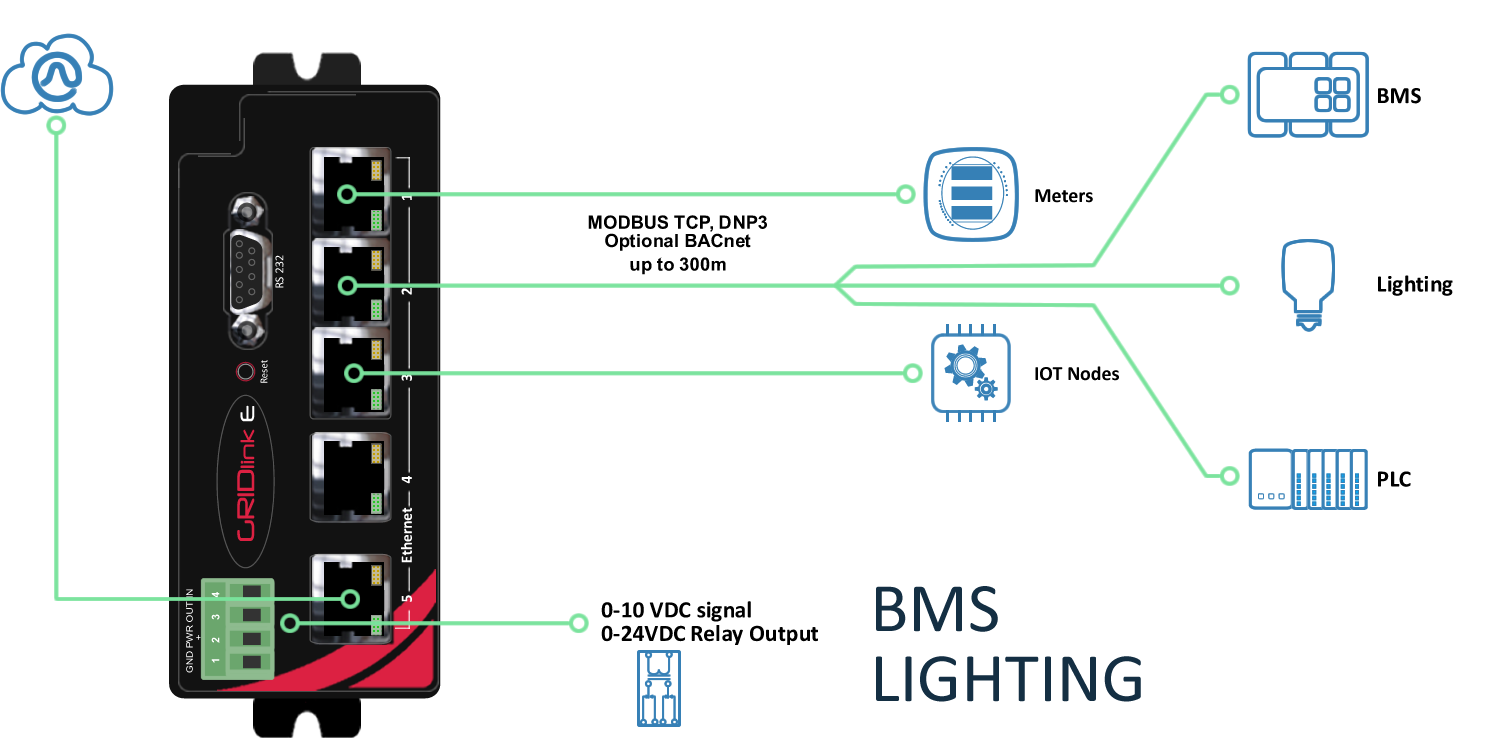
GRIDlink Title 24 Demand Response Controller
GRIDlink Technologies manufactures OpenADR 2.0b certified VEN devices designed specifically for Title 24 compliance.
The GRIDlink E-T24 series provides:
• Certified OpenADR 2.0b VEN
• Industrial-grade hardware for field installations
• Integration with HVAC controllers and building systems
• Utility-compatible demand response communications
• Low-cost solution for new construction and retrofits
The device allows contractors and engineers to quickly implement Title 24 demand response capability without requiring a full building automation system.
Designed for Contractors and Engineers
Many projects require demand response compliance but do not include a full building management system.
The GRIDlink E-T24 enables:
• Standalone demand response control
• Integration with existing equipment
• Fast installation for electrical contractors
• Reliable operation in harsh environments